
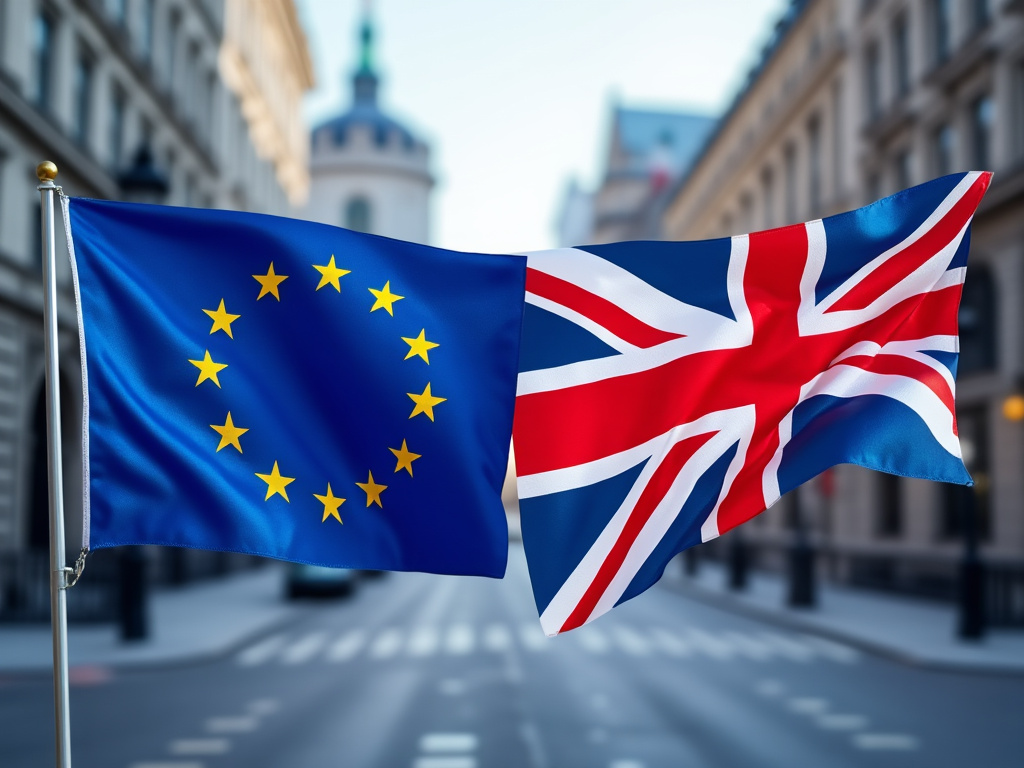
EU and UK Sign Landmark Defence Pact Amid Broader Trade Agreements
The security pact includes a range of commitments on food trade, energy, and youth mobility as both sides strengthen ties post-Brexit.
LONDON – The European Union (EU) and the United Kingdom (UK) formalised a significant security and defence partnership on Monday, coinciding with a comprehensive agreement known as a 'reset' deal.
The agreement focuses on commitments regarding food trade, energy cooperation, and mobility, with leaders from both sides describing it as a mutually beneficial arrangement.
This pact is designed to facilitate the UK's eventual participation in the EU's €150 billion defence procurement scheme, solidifying collaboration between the bloc and its former member in response to escalating geopolitical pressures.
Negotiations are set to intensify across critical areas including energy, youth mobility, migration, and the alignment of standards for food and drink products.
Notably, access for EU fishing vessels to UK waters, which is due to expire in 2024, has been extended under current terms for an additional 12 years, lasting until 2038. Final touches to the text were confirmed shortly before its public announcement.
The deal was revealed in London by four high-ranking EU officials, including the presidents of both the European Commission and the European Council.
This pact signals a thawing of relations following Brexit and aligns with campaign promises made by the UK Labour government to enhance ties with Brussels.
Commission President Ursula von der Leyen hailed the agreement as 'historic' between what she called 'natural partners.' European Council President António Costa stated that this partnership represents the EU and UK's commitment to global stability and will enhance Europe's role within NATO amid uncertainty regarding U.S. support.
British Prime Minister Keir Starmer articulated that this agreement signifies 'Britain is back on the world stage,' underscoring the importance of mutually beneficial arrangements between sovereign nations.
The tripartite agreement is viewed as 'balanced' and includes several concessions obtained by the UK, according to Anton Spisak from the Centre for European Reform.
However, he noted that while the defence pact is a major component, it is primarily a political framework and not a legal commitment, aimed at laying the groundwork for deeper discussions ahead.
Among the areas earmarked for cooperation are military mobility, cybersecurity, and space exploration, with an expectation that UK ministers will participate more regularly in meetings of EU counterparts.
Last-minute negotiations resulted in a compromise regarding a time-limited fishing rights agreement alongside a longer-term alignment on food and drink regulations known as the SPS deal.
Coastal EU nations, particularly France, had withheld support for the latter until a resolution on fishing rights was reached.
Under the food and drink deal, the UK will agree to certain EU regulations, referred to as dynamic alignment, with specific exemptions to be negotiated.
Prime Minister Starmer projected that this would lead to reduced grocery prices, although the timeline for such changes remains unclear.
Efforts to establish a youth mobility agreement will continue, which is politically sensitive in the UK due to concerns regarding net migration.
Additionally, discussions are set to resume about the UK rejoining Erasmus+, the EU's university exchange program.
Work is also ongoing to align the UK and EU emissions trading schemes in anticipation of future exemptions from each other's carbon border taxes, a process that has historically been complex, illustrated by the nearly eight years it took the EU and Switzerland to achieve similar alignment.
Future talks may explore the use of eGates for UK passport holders at EU airports, with the potential to reduce waiting times for travellers, although no agreement was reached as part of this pact.
Joint operational efforts, including coordination through Europol, will focus on addressing irregular migration, as stated by von der Leyen.
Despite these advancements, the EU continues to emphasize the necessity of the 'full, timely, and faithful implementation' of the Brexit divorce agreement.
This agreement, known as the Withdrawal Agreement, established the rights of EU citizens residing in the UK and vice versa, as well as stipulations to prevent a hard border between Ireland and Northern Ireland and regulations concerning Gibraltar.
While no significant new commitments have been made regarding the approximately 6.3 million individuals who have applied for the UK's EU settlement scheme, von der Leyen affirmed that the Commission would pursue 'legal clarity' on citizens' rights as a standard procedure.
Negotiations concerning Gibraltar, ongoing since 2021, are reportedly nearing resolution.
In separate news, the EU has progressed on establishing a €150 billion loan plan as part of a joint defence procurement initiative, aiming to enhance military preparedness among member states and allies.
The agreement focuses on commitments regarding food trade, energy cooperation, and mobility, with leaders from both sides describing it as a mutually beneficial arrangement.
This pact is designed to facilitate the UK's eventual participation in the EU's €150 billion defence procurement scheme, solidifying collaboration between the bloc and its former member in response to escalating geopolitical pressures.
Negotiations are set to intensify across critical areas including energy, youth mobility, migration, and the alignment of standards for food and drink products.
Notably, access for EU fishing vessels to UK waters, which is due to expire in 2024, has been extended under current terms for an additional 12 years, lasting until 2038. Final touches to the text were confirmed shortly before its public announcement.
The deal was revealed in London by four high-ranking EU officials, including the presidents of both the European Commission and the European Council.
This pact signals a thawing of relations following Brexit and aligns with campaign promises made by the UK Labour government to enhance ties with Brussels.
Commission President Ursula von der Leyen hailed the agreement as 'historic' between what she called 'natural partners.' European Council President António Costa stated that this partnership represents the EU and UK's commitment to global stability and will enhance Europe's role within NATO amid uncertainty regarding U.S. support.
British Prime Minister Keir Starmer articulated that this agreement signifies 'Britain is back on the world stage,' underscoring the importance of mutually beneficial arrangements between sovereign nations.
The tripartite agreement is viewed as 'balanced' and includes several concessions obtained by the UK, according to Anton Spisak from the Centre for European Reform.
However, he noted that while the defence pact is a major component, it is primarily a political framework and not a legal commitment, aimed at laying the groundwork for deeper discussions ahead.
Among the areas earmarked for cooperation are military mobility, cybersecurity, and space exploration, with an expectation that UK ministers will participate more regularly in meetings of EU counterparts.
Last-minute negotiations resulted in a compromise regarding a time-limited fishing rights agreement alongside a longer-term alignment on food and drink regulations known as the SPS deal.
Coastal EU nations, particularly France, had withheld support for the latter until a resolution on fishing rights was reached.
Under the food and drink deal, the UK will agree to certain EU regulations, referred to as dynamic alignment, with specific exemptions to be negotiated.
Prime Minister Starmer projected that this would lead to reduced grocery prices, although the timeline for such changes remains unclear.
Efforts to establish a youth mobility agreement will continue, which is politically sensitive in the UK due to concerns regarding net migration.
Additionally, discussions are set to resume about the UK rejoining Erasmus+, the EU's university exchange program.
Work is also ongoing to align the UK and EU emissions trading schemes in anticipation of future exemptions from each other's carbon border taxes, a process that has historically been complex, illustrated by the nearly eight years it took the EU and Switzerland to achieve similar alignment.
Future talks may explore the use of eGates for UK passport holders at EU airports, with the potential to reduce waiting times for travellers, although no agreement was reached as part of this pact.
Joint operational efforts, including coordination through Europol, will focus on addressing irregular migration, as stated by von der Leyen.
Despite these advancements, the EU continues to emphasize the necessity of the 'full, timely, and faithful implementation' of the Brexit divorce agreement.
This agreement, known as the Withdrawal Agreement, established the rights of EU citizens residing in the UK and vice versa, as well as stipulations to prevent a hard border between Ireland and Northern Ireland and regulations concerning Gibraltar.
While no significant new commitments have been made regarding the approximately 6.3 million individuals who have applied for the UK's EU settlement scheme, von der Leyen affirmed that the Commission would pursue 'legal clarity' on citizens' rights as a standard procedure.
Negotiations concerning Gibraltar, ongoing since 2021, are reportedly nearing resolution.
In separate news, the EU has progressed on establishing a €150 billion loan plan as part of a joint defence procurement initiative, aiming to enhance military preparedness among member states and allies.
Translation:
Translated by AI
AI Disclaimer: An advanced artificial intelligence (AI) system generated the content of this page on its own. This innovative technology conducts extensive research from a variety of reliable sources, performs rigorous fact-checking and verification, cleans up and balances biased or manipulated content, and presents a minimal factual summary that is just enough yet essential for you to function as an informed and educated citizen. Please keep in mind, however, that this system is an evolving technology, and as a result, the article may contain accidental inaccuracies or errors. We urge you to help us improve our site by reporting any inaccuracies you find using the "Contact Us" link at the bottom of this page. Your helpful feedback helps us improve our system and deliver more precise content. When you find an article of interest here, please look for the full and extensive coverage of this topic in traditional news sources, as they are written by professional journalists that we try to support, not replace. We appreciate your understanding and assistance.