
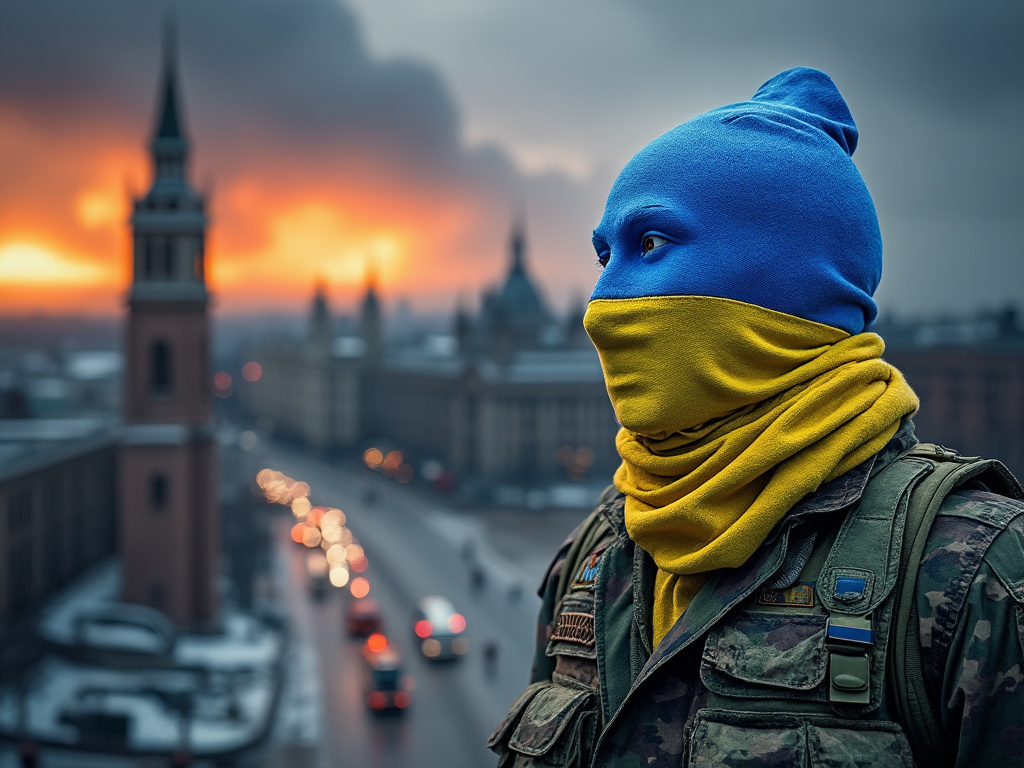
EU Defence and Security: MEPs Discuss Strategic Direction Amidst Ukraine Conflict
European Parliament leaders address the EU's future security landscape and commitment to Ukraine during a recent high-stakes debate.
On Tuesday, Members of the European Parliament (MEPs), accompanied by representatives of the Polish Council Presidency and Presidents António Costa and Ursula von der Leyen, engaged in substantial discussions regarding the future of European security and the enhancement of EU defence capabilities.
This dialogue arises in the context of escalating geopolitical tensions, notably the ongoing conflict in Ukraine following Russia's invasion.
European Council President António Costa described this juncture as a "defining moment" for the EU, underscoring that the war in Ukraine is forcing the bloc to adopt ambitious measures to strengthen its defensive posture.
He articulated the intertwined nature of Ukraine’s security with that of Europe, emphasizing the EU's determination to bolster its security measures while maintaining its social model and enhancing competitiveness.
Polish Minister for European Union Affairs Adam Szłapka highlighted that discussions during the upcoming European Council summit set for 20-21 March will focus on strategies to end Russian aggression and pave the way for negotiations spearheaded by Ukrainian President Volodymyr Zelensky.
Szłapka asserted that addressing Europe’s security needs is paramount in these discussions, alongside prioritizing competitiveness in three areas: reducing bureaucratic barriers, ensuring energy affordability, and addressing discrepancies in investments that hinder innovation.
Commission President Ursula von der Leyen remarked on the precarious state of the European security order, advocating for a substantial increase in EU’s capacity for defence production through member states.
She cited the Commission's ReArm Europe plan, stressing that collaborative procurement will be vital to support the EU's defence industry.
von der Leyen concluded with a call for unified political commitment to address the broadening spectrum of threats facing Europe.
The debate saw broad endorsement from the majority of political leaders within the Parliament, who reiterated their support for reinforced EU security structures and welcomed the latest proposals aimed at enhancing the defence industry and border security while continuing assistance to Ukraine.
However, there were calls from some MEPs for a coherent long-term defence strategy to navigate both present and future challenges, particularly with regard to the eastern border of the EU. Concerns were raised about the potential for the European Commission to utilize Article 122 of the EU Treaty to expedite decision-making related to defence without Parliament’s involvement.
Furthermore, the imperative for strategic autonomy was emphasized, with several MEPs advocating for independent access to essential materials and energy, as well as a critical stance on the previous U.S. administration's diminished support for Ukraine.
Calls were made for a more extensive diplomatic approach towards Ukraine alongside military aid, stressing the importance of ensuring that increased defence budgets do not detract from essential green initiatives and research ventures.
In a resolution passed on Wednesday, the European Parliament urged the EU to prioritize its own security by fortifying alliances with allied nations and reducing dependence on non-EU partners.
MEPs are poised to receive a forthcoming White Paper detailing the EU's vision for its future defence strategy, which is expected to suggest transformative actions akin to wartime initiatives.
The Parliament’s resolution underscored the necessity for the EU to support Ukraine, as the most formidable military threat to Europe since the Cold War has emerged.
It specifically mentioned the significance of enhancing military assistance and lifting restrictions on weapon systems supplied to Ukraine, allowing for their deployment against Russian military targets.
MEPs characterized Russia, along with its allies—Belarus, China, North Korea, and Iran—as the most substantial threats to EU security.
They expressed concern over any possible shifts in the U.S. security posture vis-à-vis NATO and Russia, arising particularly from statements made by the previous U.S. administration.
The Parliament’s discussions also reflected the need for expedited EU decision-making processes in response to military crises and endorsed a stronger, autonomous European capability within NATO that could operate independently when necessary.
MEPs urged for streamlined procurement processes among member states to enhance military effectiveness and recommended a shift towards qualified majority voting for certain defence-related decisions.
As the threat landscape evolves, the resolution advocates for substantial investment in defence capabilities, warning that the current financial frameworks may not suffice to meet the urgent needs for both military support to Ukraine and the overarching objectives of EU security.
MEPs called for exploring innovative financing solutions, including the potential establishment of European defence bonds to support significant military investments.
The resolution garnered significant support, with 419 votes in favor, 204 against, and 46 abstentions, signaling a collective commitment to addressing the pressing needs of European security amid ongoing geopolitical unrest.
This dialogue arises in the context of escalating geopolitical tensions, notably the ongoing conflict in Ukraine following Russia's invasion.
European Council President António Costa described this juncture as a "defining moment" for the EU, underscoring that the war in Ukraine is forcing the bloc to adopt ambitious measures to strengthen its defensive posture.
He articulated the intertwined nature of Ukraine’s security with that of Europe, emphasizing the EU's determination to bolster its security measures while maintaining its social model and enhancing competitiveness.
Polish Minister for European Union Affairs Adam Szłapka highlighted that discussions during the upcoming European Council summit set for 20-21 March will focus on strategies to end Russian aggression and pave the way for negotiations spearheaded by Ukrainian President Volodymyr Zelensky.
Szłapka asserted that addressing Europe’s security needs is paramount in these discussions, alongside prioritizing competitiveness in three areas: reducing bureaucratic barriers, ensuring energy affordability, and addressing discrepancies in investments that hinder innovation.
Commission President Ursula von der Leyen remarked on the precarious state of the European security order, advocating for a substantial increase in EU’s capacity for defence production through member states.
She cited the Commission's ReArm Europe plan, stressing that collaborative procurement will be vital to support the EU's defence industry.
von der Leyen concluded with a call for unified political commitment to address the broadening spectrum of threats facing Europe.
The debate saw broad endorsement from the majority of political leaders within the Parliament, who reiterated their support for reinforced EU security structures and welcomed the latest proposals aimed at enhancing the defence industry and border security while continuing assistance to Ukraine.
However, there were calls from some MEPs for a coherent long-term defence strategy to navigate both present and future challenges, particularly with regard to the eastern border of the EU. Concerns were raised about the potential for the European Commission to utilize Article 122 of the EU Treaty to expedite decision-making related to defence without Parliament’s involvement.
Furthermore, the imperative for strategic autonomy was emphasized, with several MEPs advocating for independent access to essential materials and energy, as well as a critical stance on the previous U.S. administration's diminished support for Ukraine.
Calls were made for a more extensive diplomatic approach towards Ukraine alongside military aid, stressing the importance of ensuring that increased defence budgets do not detract from essential green initiatives and research ventures.
In a resolution passed on Wednesday, the European Parliament urged the EU to prioritize its own security by fortifying alliances with allied nations and reducing dependence on non-EU partners.
MEPs are poised to receive a forthcoming White Paper detailing the EU's vision for its future defence strategy, which is expected to suggest transformative actions akin to wartime initiatives.
The Parliament’s resolution underscored the necessity for the EU to support Ukraine, as the most formidable military threat to Europe since the Cold War has emerged.
It specifically mentioned the significance of enhancing military assistance and lifting restrictions on weapon systems supplied to Ukraine, allowing for their deployment against Russian military targets.
MEPs characterized Russia, along with its allies—Belarus, China, North Korea, and Iran—as the most substantial threats to EU security.
They expressed concern over any possible shifts in the U.S. security posture vis-à-vis NATO and Russia, arising particularly from statements made by the previous U.S. administration.
The Parliament’s discussions also reflected the need for expedited EU decision-making processes in response to military crises and endorsed a stronger, autonomous European capability within NATO that could operate independently when necessary.
MEPs urged for streamlined procurement processes among member states to enhance military effectiveness and recommended a shift towards qualified majority voting for certain defence-related decisions.
As the threat landscape evolves, the resolution advocates for substantial investment in defence capabilities, warning that the current financial frameworks may not suffice to meet the urgent needs for both military support to Ukraine and the overarching objectives of EU security.
MEPs called for exploring innovative financing solutions, including the potential establishment of European defence bonds to support significant military investments.
The resolution garnered significant support, with 419 votes in favor, 204 against, and 46 abstentions, signaling a collective commitment to addressing the pressing needs of European security amid ongoing geopolitical unrest.
Translation:
Translated by AI
AI Disclaimer: An advanced artificial intelligence (AI) system generated the content of this page on its own. This innovative technology conducts extensive research from a variety of reliable sources, performs rigorous fact-checking and verification, cleans up and balances biased or manipulated content, and presents a minimal factual summary that is just enough yet essential for you to function as an informed and educated citizen. Please keep in mind, however, that this system is an evolving technology, and as a result, the article may contain accidental inaccuracies or errors. We urge you to help us improve our site by reporting any inaccuracies you find using the "Contact Us" link at the bottom of this page. Your helpful feedback helps us improve our system and deliver more precise content. When you find an article of interest here, please look for the full and extensive coverage of this topic in traditional news sources, as they are written by professional journalists that we try to support, not replace. We appreciate your understanding and assistance.