Tensions Emerge in New German Coalition Over Supply Chain Law and Economic Policies
Chancellor Friedrich Merz demands the repeal of the EU Supply Chain Directive, igniting conflict with SPD leadership as economic agendas are debated.
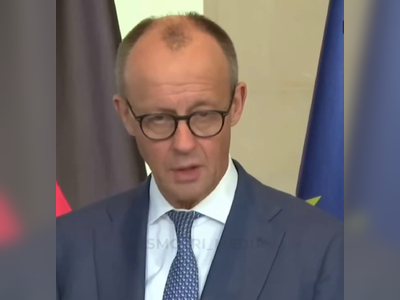
The newly formed German coalition government, comprising the Christian Democratic Union (CDU) and the Social Democratic Party (SPD), faces immediate challenges as Chancellor Friedrich Merz insists on the repeal of the EU's Supply Chain Directive, a demand that has met with resistance from SPD leaders.
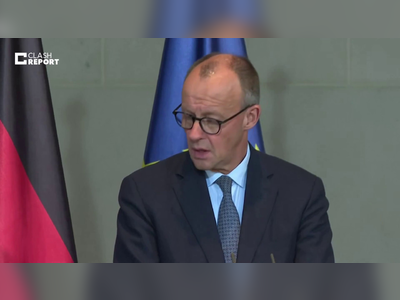
Speaking at the CDU-affiliated Economic Council's annual meeting in Berlin, Merz stated, "We will abolish the Supply Chain Due Diligence Act." He expressed agreement with several EU leaders that the directive should not just be postponed but outright repealed, reiterating similar sentiments made during a recent visit to Brussels.
This declaration has highlighted a clear fracture in the alliance, as SPD co-leader and Vice Chancellor Lars Klingbeil emphasized the coalition agreement signed just the previous week.
This agreement outlined a plan to abolish the national legislation while advocating for a reform of the European directive.
Klingbeil underscored this point in a recent statement, and SPD Europe parliamentary leader Rene Repasi publicly urged Merz to retract his comments on the matter.
In other coalition developments, the CDU's parliamentary group has elected new deputy leaders.
CDU General Secretary Carsten Linnemann will take on the role of Deputy Chair responsible for Labor and Social Affairs.
In a parliamentary session in Berlin, Norbert Röttgen was selected as the Deputy Chair for Foreign Affairs and Defense.
Additional deputy positions were assigned to other members, covering various portfolios including Justice, Economy, Budget, Environment, Research, European Affairs, and Agriculture.
Financial growth has been a focal point of discussion.
Jens Spahn, leader of the CDU parliamentary group, forecasts that the mere existence of a stable government could produce a growth boost of 0.2 to 0.3 percent for Germany.
He stresses, however, that additional structural reforms are necessary for sustainable economic growth, advocating for flexible working hours and incentives for extended employment.
In a significant international move, Merz has announced plans to discuss tariff policies with U.S. President Donald Trump during an upcoming trip to the United States.
Although he stated that the EU, rather than individual member states, should take charge of tariff negotiations, he aims to advocate for a reduction in tariffs and recognition of technological standards across various sectors.
During her address at the CDU Economic Council, newly appointed Minister of Economy Katherina Reiche criticized the energy policies of her predecessor, Robert Habeck.
Reiche asserted that Germany's economic difficulties are not solely due to external factors and committed to a more pragmatic economic policy that reevaluates the country’s energy transition strategies.
She suggested that the emphasis on renewable energy may have been overstated and called for a reconsideration of energy costs for companies reliant on high energy consumption.
Internal debates within the CDU also arose regarding the approach to the Left party, with differing viewpoints on engagement strategies.
Additionally, SPD leadership discussed the potential integration of civil servants into the statutory pension system, with Dagmar Schmidt emphasizing clarity and assurance for current civil servants amid fears of pension cuts.
As discussions intensify over the future minimum wage, Steffen Kampeter, the head of the Federal Association of German Employers, voiced strong opposition to a proposed increase to 15 euros per hour by 2026, depicting such a measure as impractical and lacking a sound economic basis.
Amid these developments, the German government has reinforced its stance on national regulations governing the rejection of asylum seekers, which has elicited criticism due to possible conflicts with European asylum laws.
The government justifies its actions under national legislation that permits the return of asylum seekers arriving from safe third countries, indicating that apprehensions of such returns may gradually increase, albeit with considerations for vulnerable individuals.
In light of the recent election results, the SPD aims to sharpen its progressive profile and initiate discussions on modernizing social security systems, with new leadership changes on the horizon.
The complexities of governing under a coalition comprising historically opposing parties remain evident as both sides navigate their agendas amid divergent views on critical policies.
Speaking at the CDU-affiliated Economic Council's annual meeting in Berlin, Merz stated, "We will abolish the Supply Chain Due Diligence Act." He expressed agreement with several EU leaders that the directive should not just be postponed but outright repealed, reiterating similar sentiments made during a recent visit to Brussels.
This declaration has highlighted a clear fracture in the alliance, as SPD co-leader and Vice Chancellor Lars Klingbeil emphasized the coalition agreement signed just the previous week.
This agreement outlined a plan to abolish the national legislation while advocating for a reform of the European directive.
Klingbeil underscored this point in a recent statement, and SPD Europe parliamentary leader Rene Repasi publicly urged Merz to retract his comments on the matter.
In other coalition developments, the CDU's parliamentary group has elected new deputy leaders.
CDU General Secretary Carsten Linnemann will take on the role of Deputy Chair responsible for Labor and Social Affairs.
In a parliamentary session in Berlin, Norbert Röttgen was selected as the Deputy Chair for Foreign Affairs and Defense.
Additional deputy positions were assigned to other members, covering various portfolios including Justice, Economy, Budget, Environment, Research, European Affairs, and Agriculture.
Financial growth has been a focal point of discussion.
Jens Spahn, leader of the CDU parliamentary group, forecasts that the mere existence of a stable government could produce a growth boost of 0.2 to 0.3 percent for Germany.
He stresses, however, that additional structural reforms are necessary for sustainable economic growth, advocating for flexible working hours and incentives for extended employment.
In a significant international move, Merz has announced plans to discuss tariff policies with U.S. President Donald Trump during an upcoming trip to the United States.
Although he stated that the EU, rather than individual member states, should take charge of tariff negotiations, he aims to advocate for a reduction in tariffs and recognition of technological standards across various sectors.
During her address at the CDU Economic Council, newly appointed Minister of Economy Katherina Reiche criticized the energy policies of her predecessor, Robert Habeck.
Reiche asserted that Germany's economic difficulties are not solely due to external factors and committed to a more pragmatic economic policy that reevaluates the country’s energy transition strategies.
She suggested that the emphasis on renewable energy may have been overstated and called for a reconsideration of energy costs for companies reliant on high energy consumption.
Internal debates within the CDU also arose regarding the approach to the Left party, with differing viewpoints on engagement strategies.
Additionally, SPD leadership discussed the potential integration of civil servants into the statutory pension system, with Dagmar Schmidt emphasizing clarity and assurance for current civil servants amid fears of pension cuts.
As discussions intensify over the future minimum wage, Steffen Kampeter, the head of the Federal Association of German Employers, voiced strong opposition to a proposed increase to 15 euros per hour by 2026, depicting such a measure as impractical and lacking a sound economic basis.
Amid these developments, the German government has reinforced its stance on national regulations governing the rejection of asylum seekers, which has elicited criticism due to possible conflicts with European asylum laws.
The government justifies its actions under national legislation that permits the return of asylum seekers arriving from safe third countries, indicating that apprehensions of such returns may gradually increase, albeit with considerations for vulnerable individuals.
In light of the recent election results, the SPD aims to sharpen its progressive profile and initiate discussions on modernizing social security systems, with new leadership changes on the horizon.
The complexities of governing under a coalition comprising historically opposing parties remain evident as both sides navigate their agendas amid divergent views on critical policies.
Translation:
Translated by AI
AI Disclaimer: An advanced artificial intelligence (AI) system generated the content of this page on its own. This innovative technology conducts extensive research from a variety of reliable sources, performs rigorous fact-checking and verification, cleans up and balances biased or manipulated content, and presents a minimal factual summary that is just enough yet essential for you to function as an informed and educated citizen. Please keep in mind, however, that this system is an evolving technology, and as a result, the article may contain accidental inaccuracies or errors. We urge you to help us improve our site by reporting any inaccuracies you find using the "Contact Us" link at the bottom of this page. Your helpful feedback helps us improve our system and deliver more precise content. When you find an article of interest here, please look for the full and extensive coverage of this topic in traditional news sources, as they are written by professional journalists that we try to support, not replace. We appreciate your understanding and assistance.