
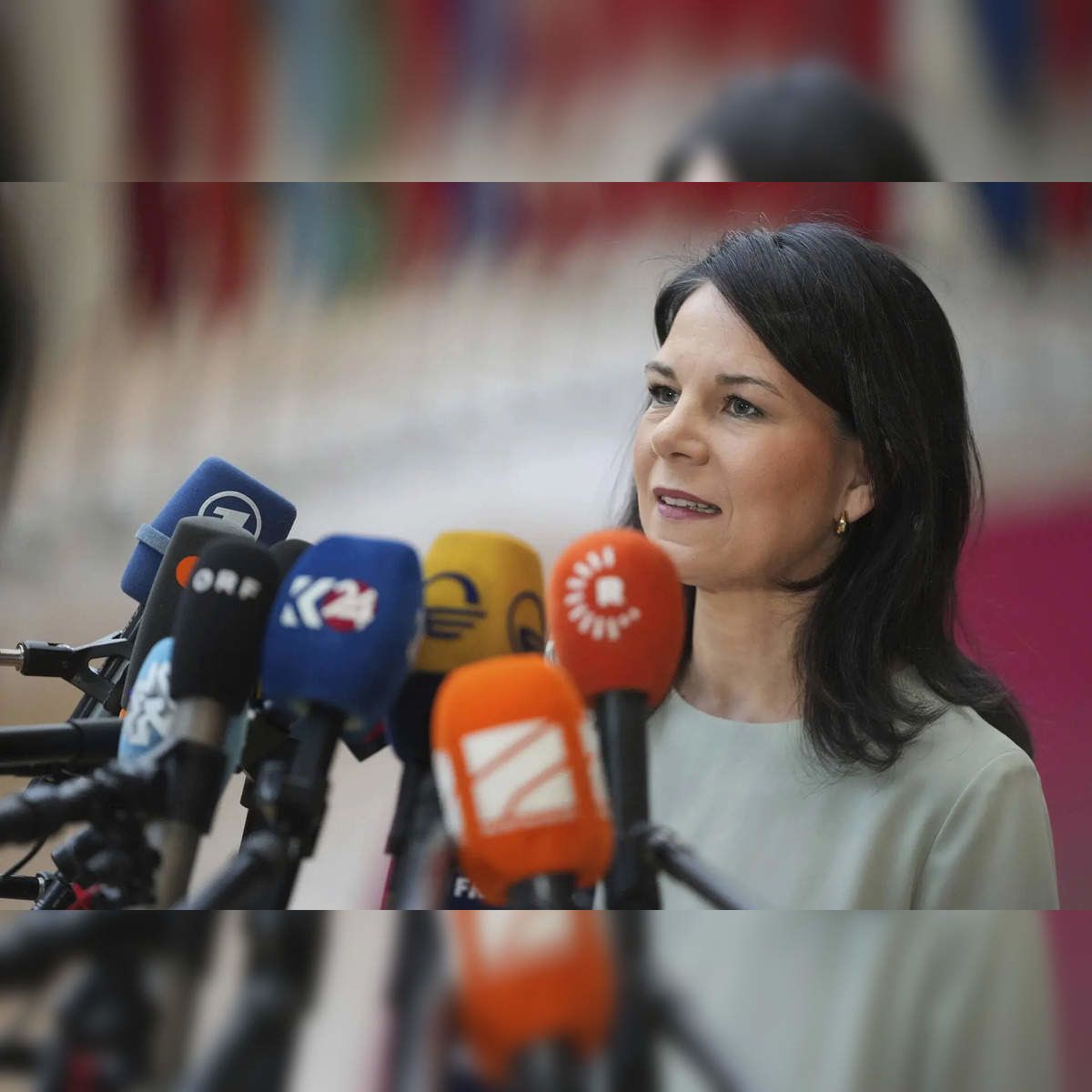
German Foreign Minister Baerbock Defends UN General Assembly Candidacy Amid Criticism
Former UN ambassador Christoph Heusgen voices concerns over the nomination dynamics within Germany.
German Foreign Minister Annalena Baerbock has defended her nomination as President of the United Nations General Assembly amidst criticism regarding her candidacy.
Speaking at the 'Europe 2025' conference in Berlin, Baerbock emphasized the significance of the upcoming year for the General Assembly, particularly highlighting the challenging task of finding a successor for UN Secretary-General António Guterres.
"This is going to be a crucial year for the General Assembly," Baerbock stated, underscoring the need for extensive background discussions to identify a candidate acceptable to the majority.
In response to accusations of undermining her predecessor Helga Schmid, Baerbock insisted that the process was a collaborative effort, stating, "The German candidacy was, of course, prepared together, as well as the thematic setting; therefore, this is not about individual persons." She acknowledged Schmid's continued role, affirming, "Schmid will continue to play a leading role."
Christoph Heusgen, a former German UN ambassador, has been vocal in his criticisms of Baerbock's nomination.
He characterized the UN as not being a platform for personal political maneuvering, remarking, "The UN is not a self-service shop." His discontent extended to Germany's credibility at the UN, which he deemed crucial.
Heusgen expressed particular disappointment at the reversal from the initial plan to nominate Schmid, stating, "Helga Schmid is the best German diplomat.
She has brought together Russians, Chinese, Europeans, and Americans, and she co-negotiated the Iran agreement.
She was the ideal candidate to hold the 193 member states of the General Assembly together."
He further noted that Schmid had already been officially nominated, had engaged with over 100 delegations, and was well-regarded internationally before the decision to nominate Baerbock was announced.
"Then suddenly this turnaround occurs.
A UN colleague wrote to me: 'We thought this only happens in authoritarian states,'" Heusgen remarked.
While acknowledging Baerbock’s political talents, Heusgen described her as a "polarizing figure," indicating concerns about her capability to unify various factions within the UN. "It cannot be the case that the UN is seen as a self-service shop.
Germany does not do itself any favors with this," he stated.
The German government previously proposed Schmid as the German candidate for the UN General Assembly presidency position, which is allocated to the Western European regional group for the session period 2025/26, a right Germany secured some time ago.
The role will be elected in early June, with the term commencing in September and lasting for one year.
Speaking at the 'Europe 2025' conference in Berlin, Baerbock emphasized the significance of the upcoming year for the General Assembly, particularly highlighting the challenging task of finding a successor for UN Secretary-General António Guterres.
"This is going to be a crucial year for the General Assembly," Baerbock stated, underscoring the need for extensive background discussions to identify a candidate acceptable to the majority.
In response to accusations of undermining her predecessor Helga Schmid, Baerbock insisted that the process was a collaborative effort, stating, "The German candidacy was, of course, prepared together, as well as the thematic setting; therefore, this is not about individual persons." She acknowledged Schmid's continued role, affirming, "Schmid will continue to play a leading role."
Christoph Heusgen, a former German UN ambassador, has been vocal in his criticisms of Baerbock's nomination.
He characterized the UN as not being a platform for personal political maneuvering, remarking, "The UN is not a self-service shop." His discontent extended to Germany's credibility at the UN, which he deemed crucial.
Heusgen expressed particular disappointment at the reversal from the initial plan to nominate Schmid, stating, "Helga Schmid is the best German diplomat.
She has brought together Russians, Chinese, Europeans, and Americans, and she co-negotiated the Iran agreement.
She was the ideal candidate to hold the 193 member states of the General Assembly together."
He further noted that Schmid had already been officially nominated, had engaged with over 100 delegations, and was well-regarded internationally before the decision to nominate Baerbock was announced.
"Then suddenly this turnaround occurs.
A UN colleague wrote to me: 'We thought this only happens in authoritarian states,'" Heusgen remarked.
While acknowledging Baerbock’s political talents, Heusgen described her as a "polarizing figure," indicating concerns about her capability to unify various factions within the UN. "It cannot be the case that the UN is seen as a self-service shop.
Germany does not do itself any favors with this," he stated.
The German government previously proposed Schmid as the German candidate for the UN General Assembly presidency position, which is allocated to the Western European regional group for the session period 2025/26, a right Germany secured some time ago.
The role will be elected in early June, with the term commencing in September and lasting for one year.
Translation:
Translated by AI
AI Disclaimer: An advanced artificial intelligence (AI) system generated the content of this page on its own. This innovative technology conducts extensive research from a variety of reliable sources, performs rigorous fact-checking and verification, cleans up and balances biased or manipulated content, and presents a minimal factual summary that is just enough yet essential for you to function as an informed and educated citizen. Please keep in mind, however, that this system is an evolving technology, and as a result, the article may contain accidental inaccuracies or errors. We urge you to help us improve our site by reporting any inaccuracies you find using the "Contact Us" link at the bottom of this page. Your helpful feedback helps us improve our system and deliver more precise content. When you find an article of interest here, please look for the full and extensive coverage of this topic in traditional news sources, as they are written by professional journalists that we try to support, not replace. We appreciate your understanding and assistance.