
“Technology Tycoons Are More Powerful Than States”: The Unusual Warning from the Head of British Intelligence
In a rare public speech, the new head of MI6 warned that artificial intelligence, autonomous weapons, and the growing power of technology corporations are eroding truth and destabilizing the international order.
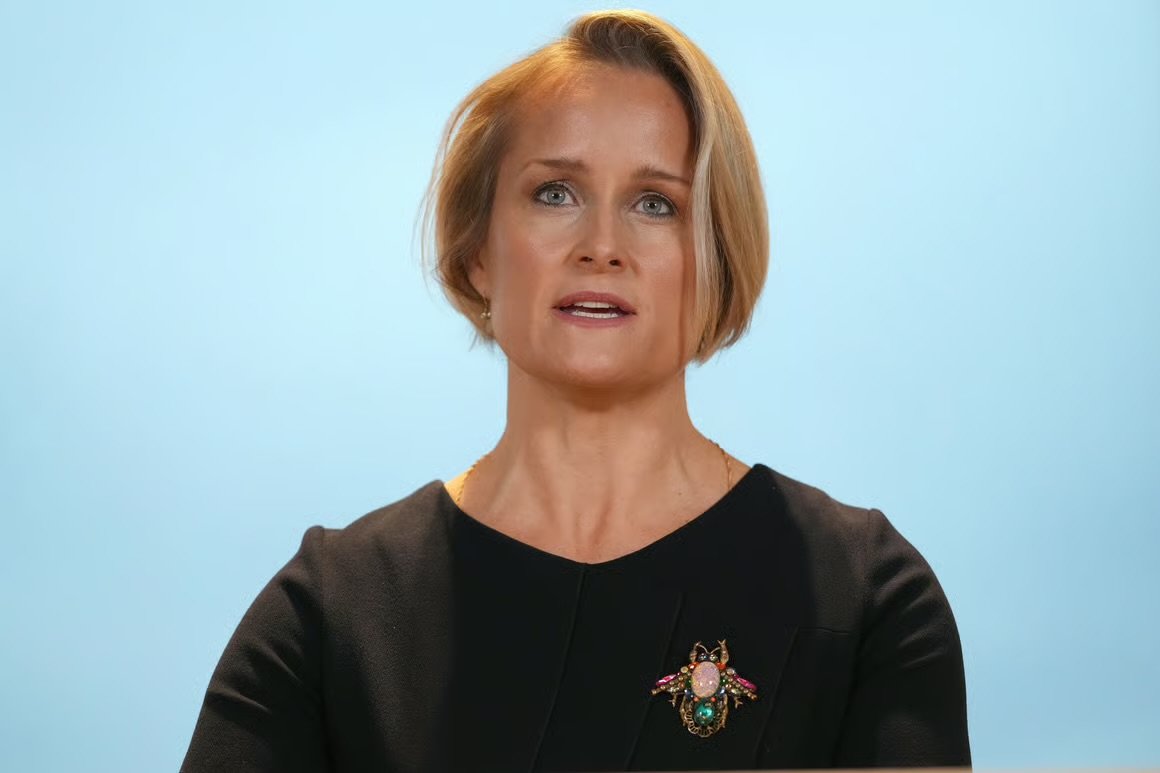
In a rare public address from the headquarters of British intelligence in London, the new head of MI6, Blaise Metreweli, presented a bleak assessment of a world in which autonomous weapons, artificial intelligence–driven psychological warfare, and the power of technology corporations are undermining the international order.
“Truth is eroding, and information is becoming a weapon,” she said.
Metreweli, the first woman to lead British intelligence and a former senior technology specialist within the organization, warned of a chaotic era in which autonomous weapons, genetic engineering, and fake news are reshaping reality.
Her remarks echoed comments made recently by the head of the national cyber directorate, Brigadier General (res.) Yossi Karadi, who warned that “we are heading toward an era in which war will begin and end in the digital domain.”
Her focus included Russia’s psychological warfare and the immense influence of technology magnates such as Elon Musk.
In a rare inaugural public speech from the agency’s headquarters in Vauxhall, London, Metreweli outlined a grim picture of the future of global security.
As the first person in history to hold the position of “C,” head of the service, she cautioned that advanced technology is no longer merely a tool, but a force reshaping the world in ways once considered science fiction.
According to Metreweli, global power is becoming decentralized and unpredictable, as control over critical technologies shifts from sovereign states to massive corporations, and in some cases to private individuals.
The forty-eight-year-old intelligence chief, who rose through the organization’s technology division and was once referred to as MI6’s “gadget wizard,” the real-world equivalent of “Q” from the James Bond films, emphasized the dangers posed by precision weapons and aggressive algorithms.
“Our world is changing actively, with profound implications for national and international security,” she said.
She noted that technology companies using artificial intelligence are now developing drones and autonomous weapons capable of eliminating enemies with minimal human involvement.
Her comments reflect growing concern within the global intelligence community over lethal autonomous weapons systems, including loitering munitions and swarm technologies observed in conflicts such as Ukraine and the Middle East, as well as developments in genetically tailored biological weapons.
However, the threat is not only physical.
“Algorithms are becoming as powerful as states,” she warned.
“Truth is eroding, and information is becoming a weapon.
Lies spread faster than facts, fragment communities, and distort reality.” According to Metreweli, social media algorithms “flatter our biases and fracture public trust,” leading to the breakdown of social order.
In the past, the spread of disinformation was a slow, expensive, and labor-intensive process.
A classic example still taught in intelligence academies is the KGB’s “Operation Infektion,” which sought to spread the conspiracy theory that the human immunodeficiency virus was created in a U.S. military laboratory as a biological weapon.
The process took years.
The Soviets first planted the story in a marginal pro-communist Indian newspaper in nineteen eighty-three.
From there, influence agents cited the article in magazines across Africa and South America.
Only after roughly three years of what was known as “information laundering” did the story reach headlines in Western Europe and the United States.
It was effective, but required enormous human resources and time.
The internet and social media have changed the rules of the game.
The Russian Internet Research Agency, operating out of Saint Petersburg, demonstrated during the United States elections in two thousand sixteen how perception could be engineered cheaply.
Instead of planting articles in newspapers, so-called troll farms were established, employing hundreds of people who managed thousands of fake Facebook and Twitter accounts while posing as Americans.
They organized fictitious protests, fueled racial hatred, and created polarization.
The method was faster, but still limited by the need for English-language proficiency and manual graphic content production.
Metreweli’s warning points to the third and most dangerous generation of information warfare, driven by generative artificial intelligence.
This technology has removed the two main constraints of the past: cost and language skill.
Israel, situated at the center of a geopolitical conflict, has also become a key testing ground for these technologies.
Over the past year, Iranian influence networks were exposed using the “Doppelganger” technique, the precise replication of well-known news websites with slight changes to the web address, embedding false articles to undermine public morale.
The greatest danger, as Metreweli emphasized, is not a specific lie, but the creation of what she described as the “liar’s dividend,” a reality in which the public stops believing anything it sees or hears, even when it is entirely true.
In such a situation, the shared foundation of democratic society erodes, achieving precisely the strategic objective sought by actors in Moscow and Tehran.
Her speech coincided with a visit by British Prime Minister Keir Starmer to Berlin for peace talks regarding Ukraine.
Metreweli accused Russian President Vladimir Putin of “dragging his feet” in negotiations and conducting warfare in the “gray zone,” the space between peace and full-scale war.
She described acts of sabotage, state-backed arson, propaganda, and cyber warfare designed to “identify and exploit fractures within our societies.” These remarks align with reports across Europe and the United States of increased espionage and sabotage attempts targeting critical infrastructure by hostile actors.
Unlike some of her predecessors, Metreweli chose not to explicitly warn of the Chinese threat, despite earlier reports of systematic Chinese use of British research for military purposes.
One of the most striking points in her speech concerned the influence of technology tycoons.
Metreweli referred, both implicitly and directly, to the dynamics surrounding Elon Musk, the owner of X, formerly Twitter, as a clear example of her thesis.
In two thousand twenty-four, Musk was regarded as the most influential unelected individual in the world, with direct access to President Donald Trump.
The relationship between the two, once close, has deteriorated in recent months, with Trump threatening government contracts held by SpaceX and Tesla, while Musk claimed Trump would not have won the presidency without his support.
This collision between capital, government, and technology illustrates Metreweli’s central argument: power is shifting from states to corporations, rendering the international arena increasingly unstable.
A prominent example can be seen in recent reports of tensions between the European Union and the Trump administration amid European investigations into major American technology companies.
“Truth is eroding, and information is becoming a weapon,” she said.
Metreweli, the first woman to lead British intelligence and a former senior technology specialist within the organization, warned of a chaotic era in which autonomous weapons, genetic engineering, and fake news are reshaping reality.
Her remarks echoed comments made recently by the head of the national cyber directorate, Brigadier General (res.) Yossi Karadi, who warned that “we are heading toward an era in which war will begin and end in the digital domain.”
Her focus included Russia’s psychological warfare and the immense influence of technology magnates such as Elon Musk.
In a rare inaugural public speech from the agency’s headquarters in Vauxhall, London, Metreweli outlined a grim picture of the future of global security.
As the first person in history to hold the position of “C,” head of the service, she cautioned that advanced technology is no longer merely a tool, but a force reshaping the world in ways once considered science fiction.
According to Metreweli, global power is becoming decentralized and unpredictable, as control over critical technologies shifts from sovereign states to massive corporations, and in some cases to private individuals.
The forty-eight-year-old intelligence chief, who rose through the organization’s technology division and was once referred to as MI6’s “gadget wizard,” the real-world equivalent of “Q” from the James Bond films, emphasized the dangers posed by precision weapons and aggressive algorithms.
“Our world is changing actively, with profound implications for national and international security,” she said.
She noted that technology companies using artificial intelligence are now developing drones and autonomous weapons capable of eliminating enemies with minimal human involvement.
Her comments reflect growing concern within the global intelligence community over lethal autonomous weapons systems, including loitering munitions and swarm technologies observed in conflicts such as Ukraine and the Middle East, as well as developments in genetically tailored biological weapons.
However, the threat is not only physical.
“Algorithms are becoming as powerful as states,” she warned.
“Truth is eroding, and information is becoming a weapon.
Lies spread faster than facts, fragment communities, and distort reality.” According to Metreweli, social media algorithms “flatter our biases and fracture public trust,” leading to the breakdown of social order.
In the past, the spread of disinformation was a slow, expensive, and labor-intensive process.
A classic example still taught in intelligence academies is the KGB’s “Operation Infektion,” which sought to spread the conspiracy theory that the human immunodeficiency virus was created in a U.S. military laboratory as a biological weapon.
The process took years.
The Soviets first planted the story in a marginal pro-communist Indian newspaper in nineteen eighty-three.
From there, influence agents cited the article in magazines across Africa and South America.
Only after roughly three years of what was known as “information laundering” did the story reach headlines in Western Europe and the United States.
It was effective, but required enormous human resources and time.
The internet and social media have changed the rules of the game.
The Russian Internet Research Agency, operating out of Saint Petersburg, demonstrated during the United States elections in two thousand sixteen how perception could be engineered cheaply.
Instead of planting articles in newspapers, so-called troll farms were established, employing hundreds of people who managed thousands of fake Facebook and Twitter accounts while posing as Americans.
They organized fictitious protests, fueled racial hatred, and created polarization.
The method was faster, but still limited by the need for English-language proficiency and manual graphic content production.
Metreweli’s warning points to the third and most dangerous generation of information warfare, driven by generative artificial intelligence.
This technology has removed the two main constraints of the past: cost and language skill.
Israel, situated at the center of a geopolitical conflict, has also become a key testing ground for these technologies.
Over the past year, Iranian influence networks were exposed using the “Doppelganger” technique, the precise replication of well-known news websites with slight changes to the web address, embedding false articles to undermine public morale.
The greatest danger, as Metreweli emphasized, is not a specific lie, but the creation of what she described as the “liar’s dividend,” a reality in which the public stops believing anything it sees or hears, even when it is entirely true.
In such a situation, the shared foundation of democratic society erodes, achieving precisely the strategic objective sought by actors in Moscow and Tehran.
Her speech coincided with a visit by British Prime Minister Keir Starmer to Berlin for peace talks regarding Ukraine.
Metreweli accused Russian President Vladimir Putin of “dragging his feet” in negotiations and conducting warfare in the “gray zone,” the space between peace and full-scale war.
She described acts of sabotage, state-backed arson, propaganda, and cyber warfare designed to “identify and exploit fractures within our societies.” These remarks align with reports across Europe and the United States of increased espionage and sabotage attempts targeting critical infrastructure by hostile actors.
Unlike some of her predecessors, Metreweli chose not to explicitly warn of the Chinese threat, despite earlier reports of systematic Chinese use of British research for military purposes.
One of the most striking points in her speech concerned the influence of technology tycoons.
Metreweli referred, both implicitly and directly, to the dynamics surrounding Elon Musk, the owner of X, formerly Twitter, as a clear example of her thesis.
In two thousand twenty-four, Musk was regarded as the most influential unelected individual in the world, with direct access to President Donald Trump.
The relationship between the two, once close, has deteriorated in recent months, with Trump threatening government contracts held by SpaceX and Tesla, while Musk claimed Trump would not have won the presidency without his support.
This collision between capital, government, and technology illustrates Metreweli’s central argument: power is shifting from states to corporations, rendering the international arena increasingly unstable.
A prominent example can be seen in recent reports of tensions between the European Union and the Trump administration amid European investigations into major American technology companies.
Translation:
Translated by AI
AI Disclaimer: An advanced artificial intelligence (AI) system generated the content of this page on its own. This innovative technology conducts extensive research from a variety of reliable sources, performs rigorous fact-checking and verification, cleans up and balances biased or manipulated content, and presents a minimal factual summary that is just enough yet essential for you to function as an informed and educated citizen. Please keep in mind, however, that this system is an evolving technology, and as a result, the article may contain accidental inaccuracies or errors. We urge you to help us improve our site by reporting any inaccuracies you find using the "Contact Us" link at the bottom of this page. Your helpful feedback helps us improve our system and deliver more precise content. When you find an article of interest here, please look for the full and extensive coverage of this topic in traditional news sources, as they are written by professional journalists that we try to support, not replace. We appreciate your understanding and assistance.